
As an Amazon Associate, I earn from qualifying purchases. This post may contain affiliate links, which means I may receive a small commission, at no cost to you, if you make a purchase through a link.
Cats need food that matches their biology: high protein, moderate fat, and specific nutrients like taurine and vitamin A. Dry kibble, wet canned food, and raw or freeze-dried options all meet those needs differently—kibble is convenient and helps dental wear, wet food adds moisture for urinary health, and raw or freeze-dried can offer higher protein with fewer carbs. We focus on practical choices that balance nutrition, safety, and what most cats will actually eat.
The most important thing to check is the ingredient list and guaranteed analysis—look for named animal proteins first, a clear protein percentage, and added taurine. Price, texture, and brand reputation matter too, but the core should be appropriate nutrients and safe sourcing. In the sections that follow, we’ll show the best options across types and explain what to watch for when buying.
Best Cat Food
Below is our full list of the best cat foods selected for taste, nutrition, and value. We tested options for kittens, adults, and seniors to help you find the right choice for your cat’s needs.
Blue Buffalo Wilderness (Chicken) — 12 lb
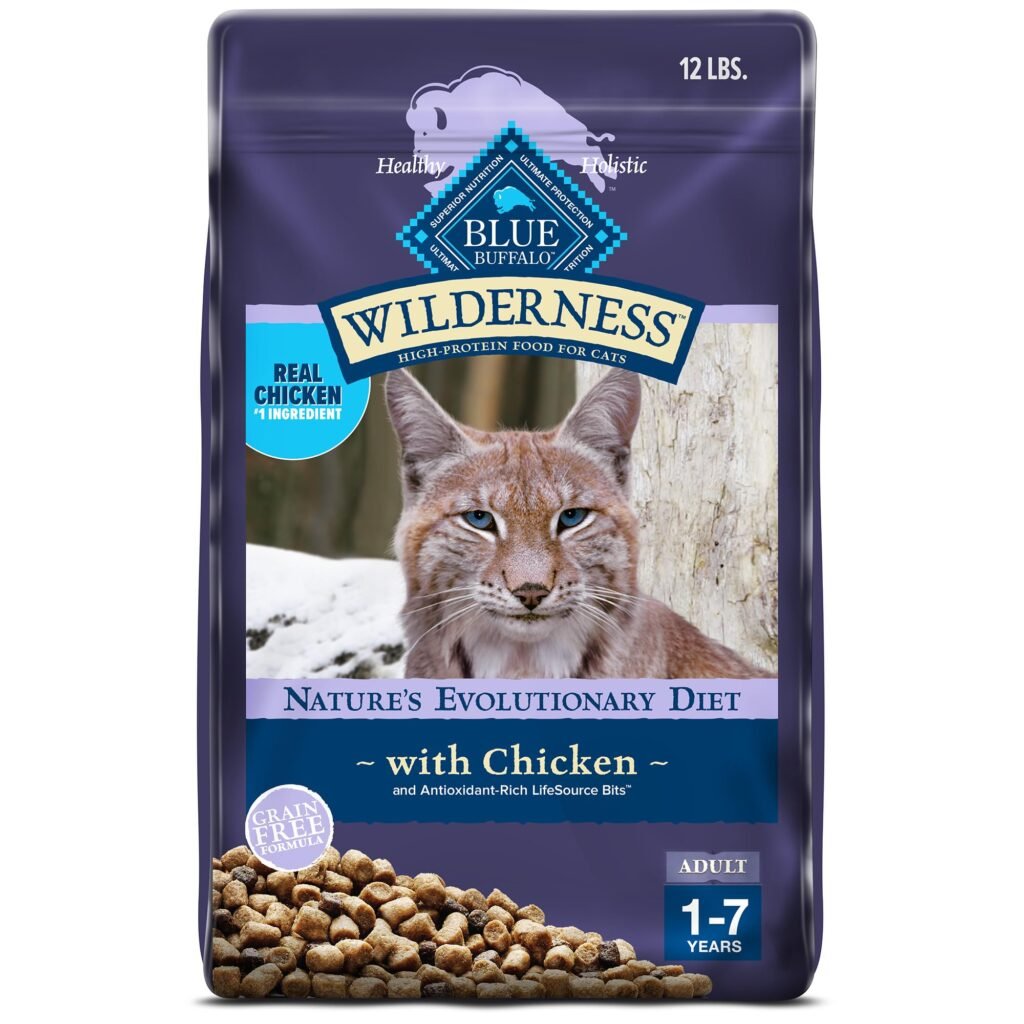
We recommend this if you want a high-protein, grain-free dry food that focuses on real chicken and simpler ingredients.
Pros
- High protein from real chicken as the first ingredient
- Grain-free formula that skips corn, wheat, and soy
- Includes omega fatty acids for skin and coat support
Cons
- Kibble can be small and softer than some brands
- Grain-free diets may not suit every cat or vet recommendation
- Higher price than basic dry cat foods
We like that the recipe puts real chicken first and keeps the ingredient list focused. That helps with cats that seem to prefer meaty flavors and may aid muscle maintenance.
The grain-free design avoids common fillers, and the added omegas and vitamin blend aim to support coat shine and general health. Cats who are picky about texture might notice the kibble feels different from other brands.
Some owners report good long-term results, but grain-free formulas are not the best fit for every cat. Talk to your vet if your cat has special dietary needs before switching.
Purina Cat Chow Naturals – 13 lb
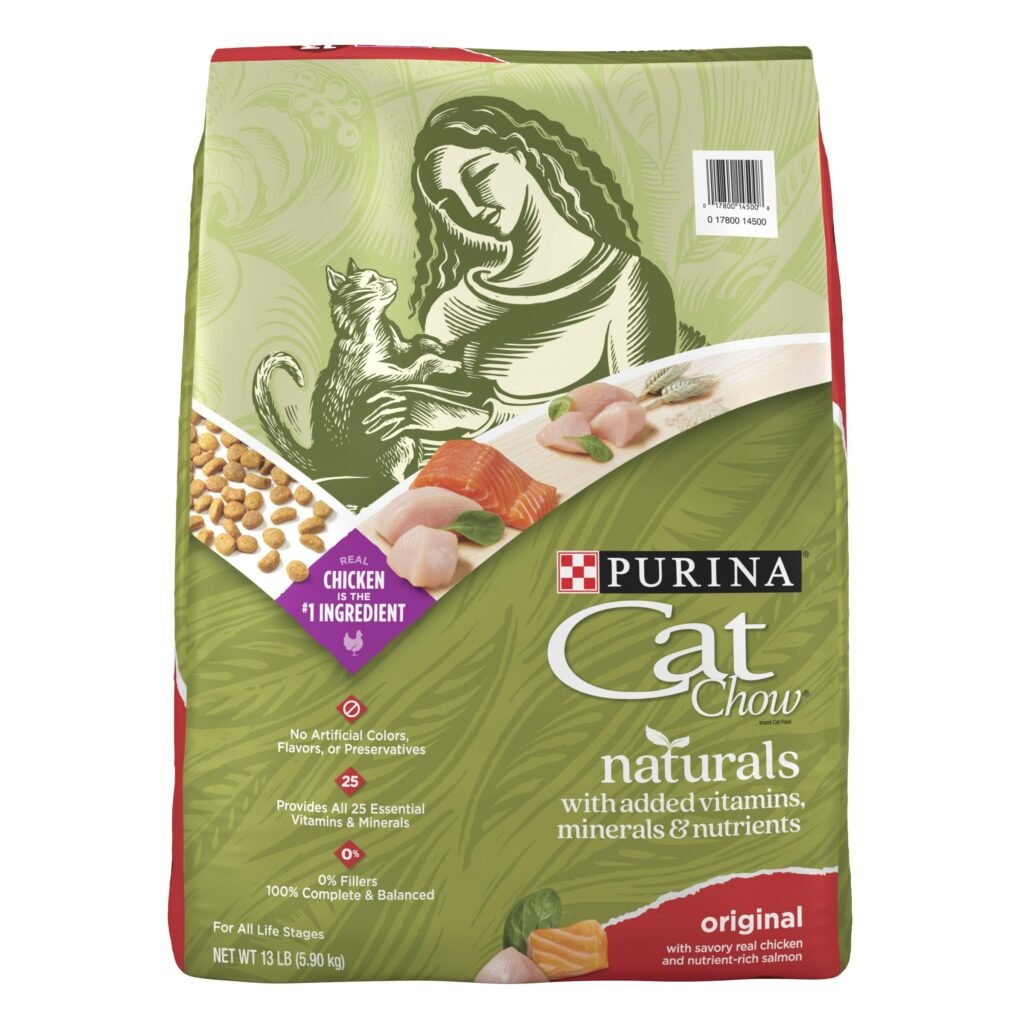
We recommend this if you want an affordable, all-life-stages dry food with real chicken and simple ingredients.
Pros
- Real chicken as the first ingredient
- Made for all life stages and indoor cats
- No artificial flavors, colors, or preservatives
Cons
- Dry food may not suit cats needing wet food
- Large bag may go stale if not stored properly
- May not meet special veterinary diet needs
We like that the recipe uses real chicken and includes salmon and whole grains for balanced nutrition. The formula lists vitamins and minerals to support skin, coat, and overall health.
The product aims to be a budget-friendly option for households with multiple cats. It comes in a sizeable bag, which can cut cost-per-pound but needs airtight storage to stay fresh.
This food covers kittens through adults, so you can keep feeding the same formula across life stages unless a vet advises otherwise. It does not replace wet food for cats who need more moisture or special diets.
Buy it on Amazon: Purina Cat Chow Naturals With Added Vitamins, Minerals and Nutrients Dry Cat Food, Naturals Original – 13 lb. Bag
IAMS Indoor Weight & Hairball Care (7 lb)
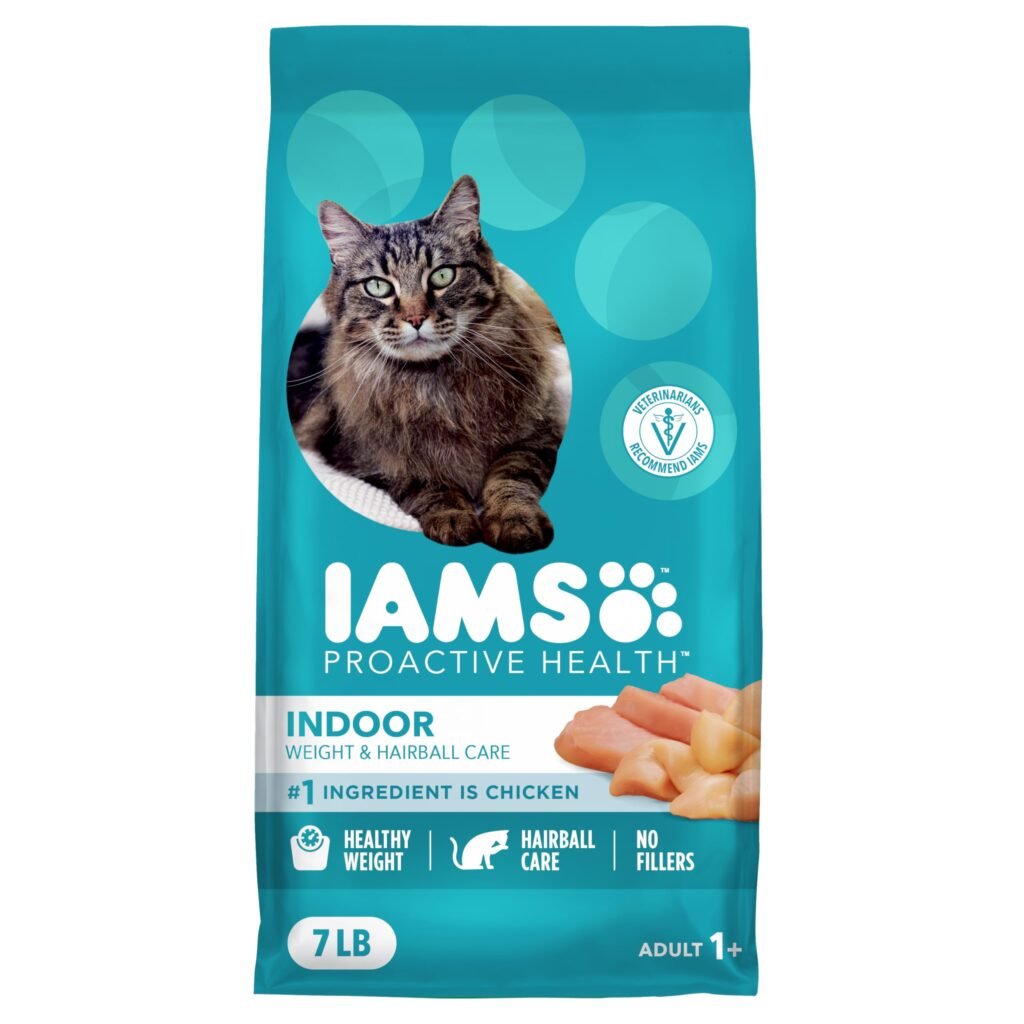
We recommend this bag if you want a vet-recommended, budget-friendly dry food that helps control weight and reduce hairballs.
Pros
- Helps manage indoor cat weight with L-carnitine.
- Fiber blend aims to cut down hairballs.
- Uses real chicken and turkey as main ingredients.
Cons
- Dry kibble only — add wet food for extra moisture.
- Some picky cats may not accept the flavor.
- May not be ideal for kittens or special medical diets.
This formula targets common indoor cat issues like lower activity and hair ingestion. The recipe focuses on steady calories and a fiber mix meant to move swallowed hair through the system.
We like that the brand positions this as complete and balanced for adult cats, so owners can use it as a main dry diet. The kibble size and calorie control aim to help keep indoor cats at a healthy weight without constant begging.
If you need a dry option that leans on weight control and hairball management, this is worth considering. See details and current price on Amazon: IAMS Indoor Weight & Hairball Care (7 lb).
Nutrish Salmon & Brown Rice
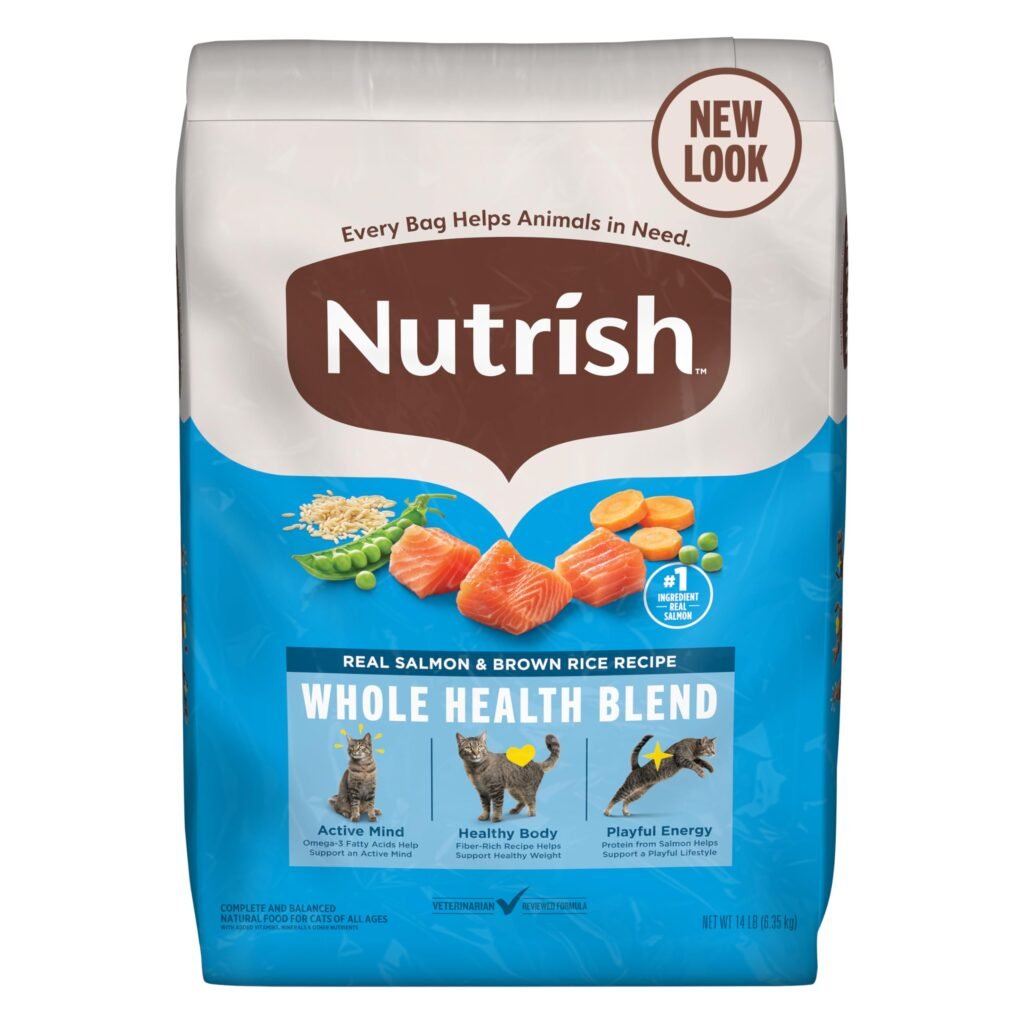
We recommend this if you want a salmon-first dry food with added vitamins and a charity tie-in.
Pros
- Real salmon listed first for protein.
- Contains vitamin E and antioxidants for immune support.
- Suited for cats of all life stages.
Cons
- Some cats may not like the flavor or texture.
- Larger bag may not suit small households.
- Not ideal if your cat needs a specialized diet.
This formula highlights salmon and brown rice, aiming to give basic nutrition across life stages. The brand notes antioxidants and vitamin E for immune support. The product also donates part of sales to an animal charity.
We find the kibble size and fish profile may work well for cats that prefer fish flavors. Buyers seeking limited-ingredient or prescription diets should check with a vet first. Feeding instructions and transitions appear on the package.
Buy Nutrish Salmon & Brown Rice on Amazon
Sheba Perfect Portions Cuts in Gravy
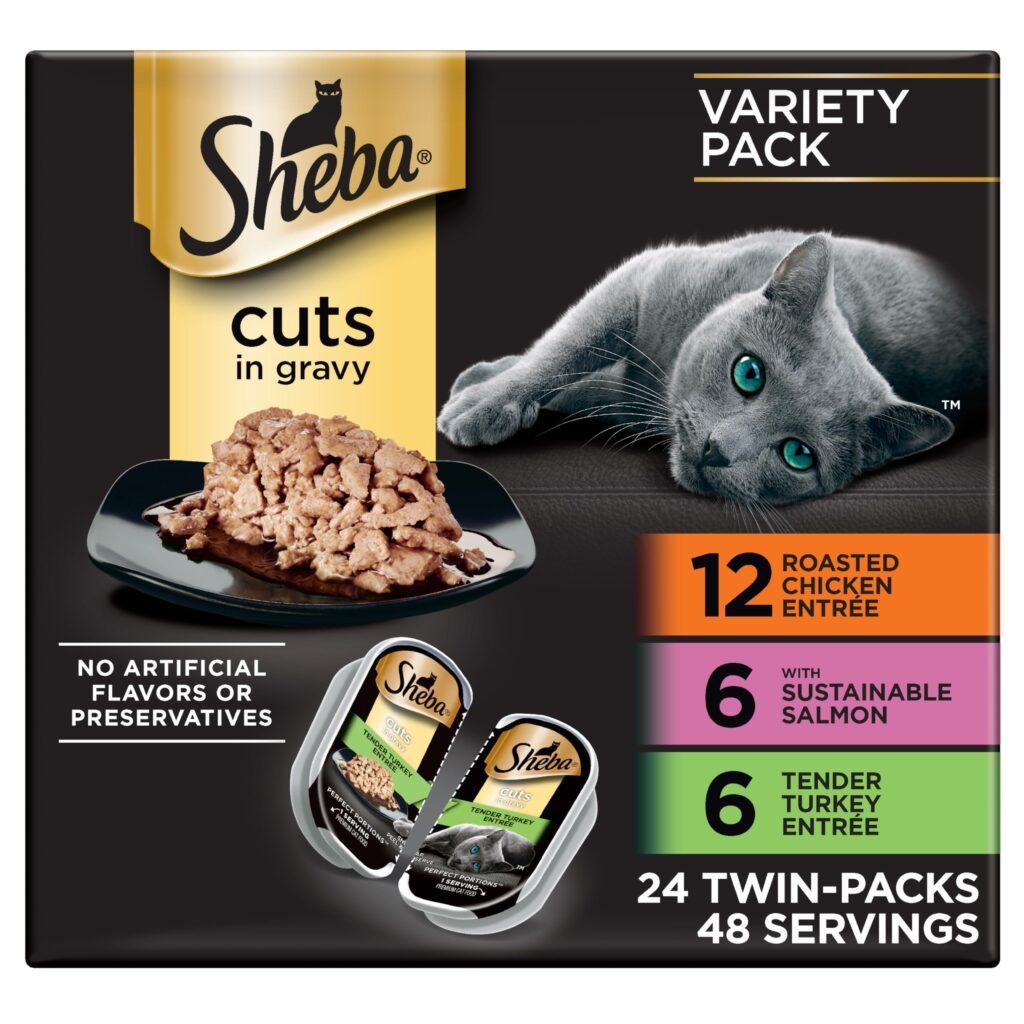
We recommend this if you want easy, portioned wet meals that many cats find tasty.
Pros
- Easy single-serve twin trays cut down on waste.
- Real chicken, salmon, and turkey in gravy appeal to picky eaters.
- Grain-free formula avoids common fillers.
Cons
- Small tray size may feel pricey per serving.
- Some cats can react with digestive upset.
- Foil tops can be hard to open for people with hand issues.
We like the convenience of the twin trays. They make feeding simple and reduce leftovers, which helps keep bowls fresh.
The gravy and tender cuts draw interest from cats that reject pate. The variety pack gives different flavors to test which one your cat prefers.
Buyers should watch how their cat reacts after a switch. A few reports note loose stools, so introduce it slowly and monitor digestion.
Sheba Perfect Portions Cuts in Gravy
Buying Guide
We look for foods that meet basic nutritional needs first. Check the label for a complete and balanced statement from a trusted authority, and confirm the food lists a real meat source near the top of the ingredient list.
We examine protein, fat, and carbohydrate levels based on life stage and activity. Kittens need more protein and calories; older cats may need lower calories and joint support. Wet food adds moisture, which helps cats that drink little water.
We read the ingredient list and guaranteed analysis. Ingredients show quality; guaranteed analysis shows nutrient ranges. Watch for excessive fillers, unclear meat sources, and high salt or sugar.
We consider special needs like food sensitivities, weight control, dental health, and medical conditions. For those issues, look for formulas labeled for the specific condition and discuss options with a veterinarian.
We evaluate texture, format, and package size. Some cats prefer pâté; others like chunks or gravy. Smaller packages help keep food fresh once opened.
We check for safety, recalls, and manufacturing standards. Prefer foods made with clear sourcing and good handling practices. Look for third-party testing or veterinary endorsements when available.
We compare price per serving, not just price per bag. Calculate cost using daily feeding amounts. A higher upfront price can be better value if the food improves health or reduces vet visits.
We read customer reviews and ask our vet for advice. Combine label facts, vet input, and our cat’s preferences to choose the best option.
Quick feature checklist
| Feature | Why it matters |
|---|---|
| Complete & balanced label | Confirms nutritional adequacy |
| Real meat listed early | Indicates quality protein |
| Appropriate life stage | Matches nutritional needs |
| Moisture level | Affects hydration |
| Ingredient clarity | Reduces risk of allergens |
| Price per serving | Shows true cost |
Frequently Asked Questions
We cover key feeding needs, how to pick food for different life stages, and what labels and reviews really mean. Expect clear steps for choosing dry or wet food and tips to judge quality from ingredients and reviews.
What are the nutritional requirements for indoor cats?
Indoor cats need high-quality animal protein like chicken or fish at the top of the ingredient list.
They also require taurine, vitamins A and D, calcium, phosphorus, and balanced fats for energy and coat health.
Portion control matters to avoid weight gain. We recommend feeding according to the cat’s weight and activity, and checking body condition regularly.
How do I choose appropriate food for a kitten?
Kittens need food labeled for growth or all life stages with higher calorie and protein levels.
Look for formulas with DHA for brain development and calcium for bone growth.
Feed kitten food until at least 12 months, or as your veterinarian advises. Offer small, frequent meals and monitor weight gain.
Which cat foods are recommended for optimal health?
We recommend foods with named animal proteins (e.g., “chicken” or “salmon”) listed first.
Choose products that meet AAFCO nutrient profiles or your country’s feeding standards.
For specific needs, pick prescription diets for conditions like kidney disease or weight control under vet guidance. Rotate protein sources if your cat tolerates them to reduce allergy risk.
What should I look for when selecting dry cat food?
Check for a named meat source as the first ingredient and moderate fat levels.
Avoid vague terms like “meat meal” without a source and limit fillers such as excess corn or wheat.
Look for added taurine and omega-3 or omega-6 fatty acids. Also confirm the kibble size suits your cat’s mouth and that the bag has a clear feeding guide.
What are the benefits of wet food for cats?
Wet food provides higher moisture content, which helps support urinary tract health.
It usually has more animal protein and fewer carbohydrates than dry food.
Wet food can aid weight control by increasing satiety per calorie. It also suits picky eaters who prefer softer textures.
How do I evaluate the quality of cat food from reviews?
Prioritize reviews that mention ingredient lists, long-term health effects, and vet feedback.
Watch for repeated issues like vomiting, weight changes, or poor stool quality across many reviews.
Check the manufacturer’s recall history and third-party testing when available. Combine reviews with ingredient checks and vet advice before changing diets.