Disclosure: This post contains affiliate links. If you make a purchase through these links, we may earn a commission at no extra cost to you.
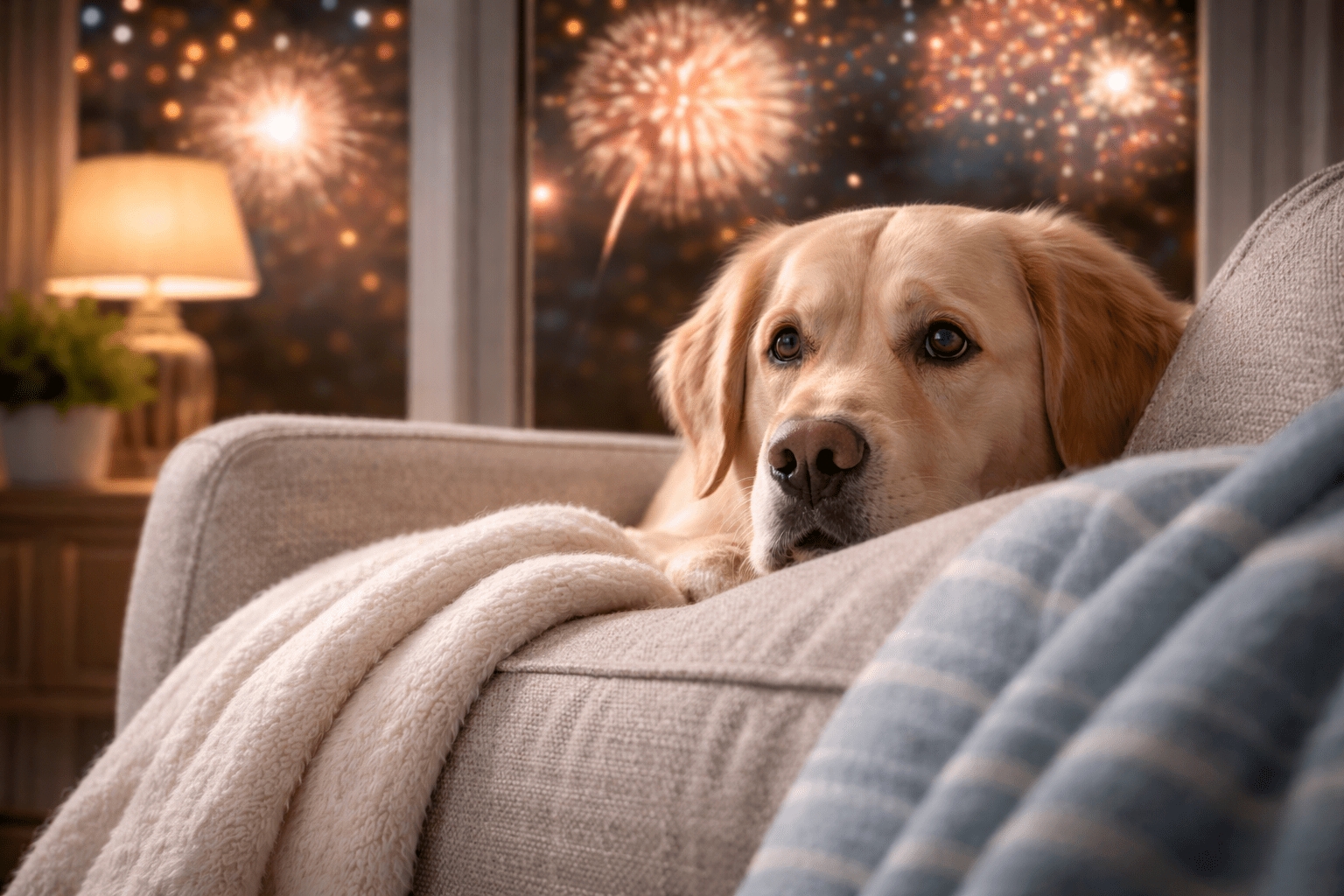
Fireworks are a familiar part of celebrations like New Year’s Eve and the Fourth of July, but for many dogs, they can be terrifying. While humans understand that fireworks are temporary and harmless, dogs experience them as loud, unpredictable threats they cannot escape.
If your dog shakes, hides, pants, or becomes restless during fireworks, you’re not alone. Fireworks anxiety is extremely common — and with the right preparation and support, it can be managed.
This guide explains why fireworks cause anxiety in dogs, how to recognize the signs, and what you can do to help your dog feel safer and calmer.
Why Fireworks Cause Anxiety in Dogs
Dogs have far more sensitive hearing than humans. Sounds that feel loud to us can feel overwhelming or even painful to dogs. Fireworks are especially stressful because they are:
- Sudden and unpredictable
- Extremely loud and repetitive
- Impossible for dogs to understand or control
Unlike thunderstorms, fireworks often come without warning and can continue for hours. This lack of predictability is a major trigger for anxiety rather than a simple startle response.
Common Signs of Fireworks Anxiety in DogsEvery dog reacts differently, but common signs of fireworks anxiety include:
- Shaking or trembling
- Panting or excessive drooling
- Hiding under furniture or in corners
- Pacing or restlessness
- Whining, barking, or howling
- Clingy behavior or following owners closely
Some dogs show only mild stress, while others experience intense fear or panic.
Mild Stress vs. Severe Fireworks Anxiety
It’s important to understand the difference between normal stress and more serious anxiety.
Mild stress may include:
- Brief alertness
- Seeking comfort
- Temporary restlessness
Severe anxiety may include:
- Continuous shaking or pacing
- Attempts to escape
- Refusal to eat or respond
- Destructive behavior
If anxiety escalates or appears in other situations (storms, travel, separation), additional support may be helpful.
How to Help Your Dog During Fireworks
Before turning to products, start with environmental and behavioral support. These steps help many dogs cope better during fireworks.
Create a Safe, Quiet Space
Set up a comfortable area away from windows and doors. Familiar beds, blankets, or toys can help your dog feel secure.
Stick to a Predictable Routine
Maintaining regular feeding, walking, and bedtime routines helps dogs feel grounded when their environment becomes stressful.
Reduce Noise Exposure
Close windows and curtains. Soft background noise or calming music can help mask fireworks sounds.
Stay Calm and Supportive
Dogs look to their owners for cues. Calm, reassuring behavior signals safety.
Avoid Punishment
Fear responses are not misbehavior. Punishment can increase anxiety and damage trust.
When Extra Support May Be Helpful
Some dogs need more than environmental changes — especially dogs with a history of anxiety, rescue dogs, or dogs exposed to repeated loud events. In these cases, adding a calming aid can make a meaningful difference.
Our Top Recommendation: The ThunderShirt Anxiety Vest
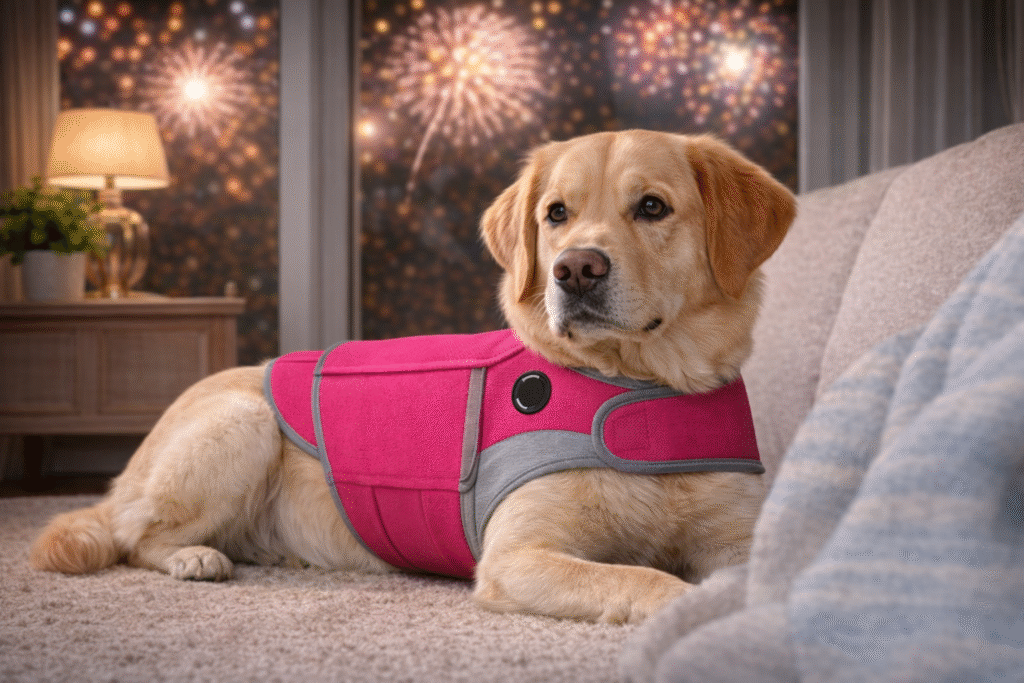
When basic calming strategies aren’t enough, many dog owners look for a proven, drug-free solution to help their dog cope with fireworks. This is where the ThunderShirt Anxiety Vest consistently stands out.
The ThunderShirt works by applying gentle, constant pressure around your dog’s torso — a technique shown to calm the nervous system in a way similar to swaddling a baby. Instead of sedating your dog or masking symptoms, it helps reduce anxiety at its source by promoting a sense of security.
What makes ThunderShirt different from generic calming wraps is its track record and trust:
- ✔ Over 80% success rate, based on manufacturer data and real-world use
- ✔ Vet-recommended and widely used by trainers and behaviorists
- ✔ Drug-free and non-invasive, safe for repeated use
- ✔ Trusted by millions of dog owners worldwide
Many owners report seeing the best results when the vest is used before fireworks begin, rather than after anxiety has already escalated.
If your dog struggles every time fireworks start, the ThunderShirt is one of the most reliable first solutions to try before considering medication.
Final Thoughts: Prepare Before the Noise Starts
Fireworks anxiety does not mean something is “wrong” with your dog. It’s a natural response to a stressful environment. With preparation, understanding, and the right support, many dogs can feel significantly calmer during loud celebrations.
Saving this guide and preparing ahead of time can help you feel confident and ready before the next fireworks night — and help your dog feel safer when it matters most.